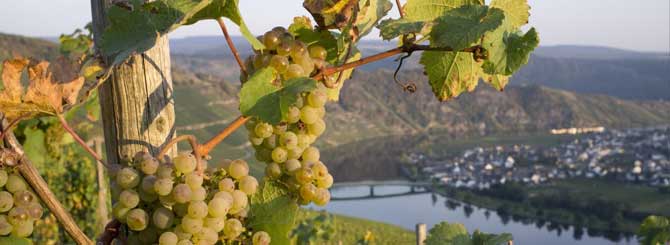
March 13th is the birthday of one of my favorite white wines and it’s celebrated across the world, and that wine happens to be Riesling! Today it turns 586 years old and it was first documented in 1435. This cool climate wine displays a beautiful nose of honeysuckle, white flowers, peach, apple, and lime and on the palate it‘s fresh, high acidity, crisp, and food-friendly. Now, as popular opinion, many think of it as a sweet wine, but I am here to hopefully change your mind on that and open your horizons. This wine can range from sweet to dry, to even a sparkling version.
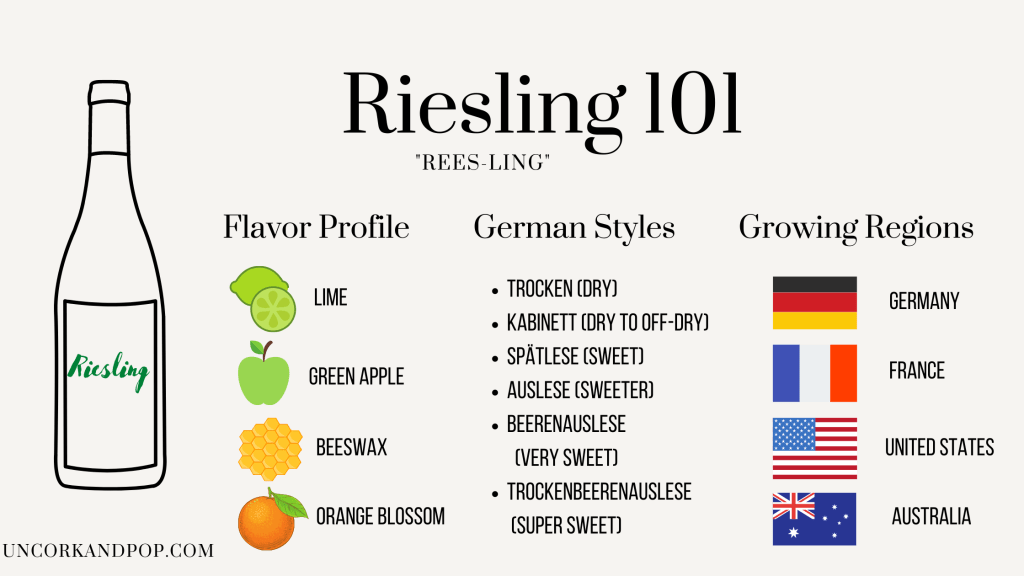
Germany is the most widely grown country for Riesling, but it is also widely grown in Alsace (France), Austria, Australia, Finger Lakes (New York), California, Washington, and Oregon.
What makes Riesling such a unique wine is that it’s one of the few white wines that can be drunk young or if it’s a higher quality it can age easily for 30+ years (sometimes up to 100 years if kept in proper conditions).
German Riesling 101
Have you ever seen a German wine bottle before? If you have, right off the bat it may be intimidating at first. Producers and European wine laws put a whole lot of information on their bottles that is easily understandable to consumers in Germany or for wine enthusiasts. But for us in the United States, especially if you are new to Rieslings, it can be a little overwhelming. I am going to give you a breakdown of what to look for when buying a German Riesling.
Main Growing Regions in Germany
If you are new to Riesling and want to try a German one, these are three regions to focus on that are widely available just about anywhere. Each of these regions will give off a different characteristic to the wine and they are pretty affordable as well.
- Mosel (Mo·selle)
- Rheingau (Rine·gow)
- Pfalz (faltz)
Styles of Riesling
As mentioned above, Rieslings can range from sweet to dry. But being able to figure out which is which can be tricky. Luckily for you, I will unlock which ones they are. If you see any of these keywords on the bottle then you will know exactly what style you are purchasing. I have them listed from driest to sweetest.
- Trocken (dry)
- Kabinett (dry to off-dry)
- Spätlese (sweet)
- Auslese (sweeter)
- Beerenauslese (very sweet)
- Trockenbeerenauslese (super sweet)
I always recommend an Auslese or Spätlese to those who are Moscato drinkers and want to venture out to another sweet wine. I feel like from there it is easier to try other white wines if they wish to develop their palate. Sweeter Rieslings are also great wines to pair with really spicy foods like Indian or Thai. The sweetness in the wine offsets the spice levels.
Other Main Growing Regions
Outside of Germany, other countries produce great Rieslings. Such as Alsace, France, which borders up with Germany but produces a much more dryer, medium-full body Rieslings. Next, we have the regions Clare Valley and Eden Valley in Australia which make dryer styles of Riesling with notes of lemon and grapefruit. Finally, the United States, like the famous Finger Lakes appellation in New York, Washington, Oregon, and California, makes everything from sweet to dry.
Wine Pairings
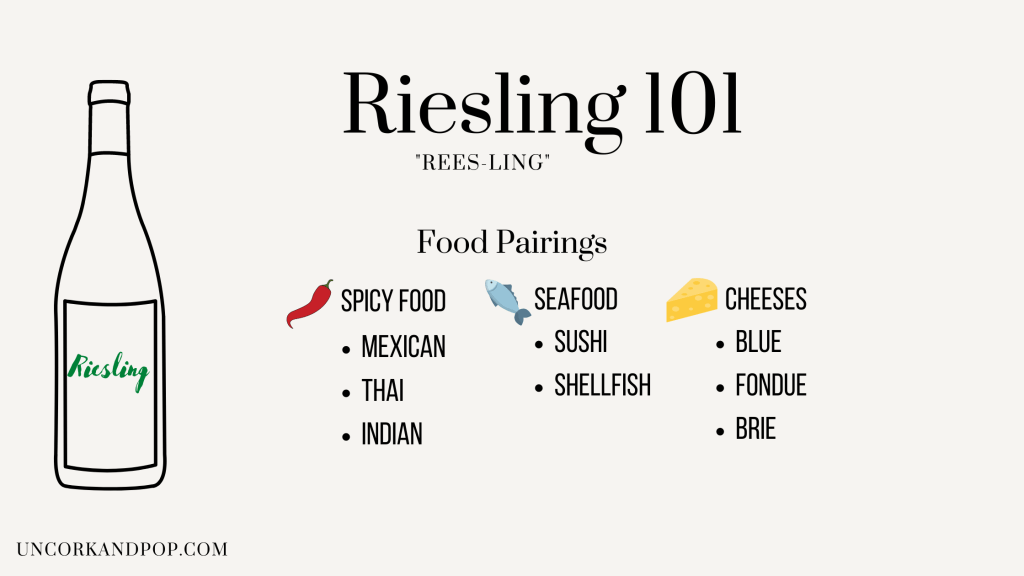
As mentioned above, Riesling does well with spices because of its slight sweetness and high acidity, it balances the flavors in the dish. But it’s a wine that is very versatile and chicken, seafood (especially sushi), pork, duck, and roasted vegetables that display natural sweet flavors like peppers, squash, and carrots are great pairings as well. As for cheeses, goat cheese, brie, and blue cheese are all great options.
 Uncork and Pop!